
Psychotherapy is a form of treatment that uses purposeful conversation and structured methods to address emotional, behavioral, and interpersonal concerns. Different techniques can help a patient recognize patterns, practice new responses, strengthen coping, and work toward agreed-upon treatment goals.
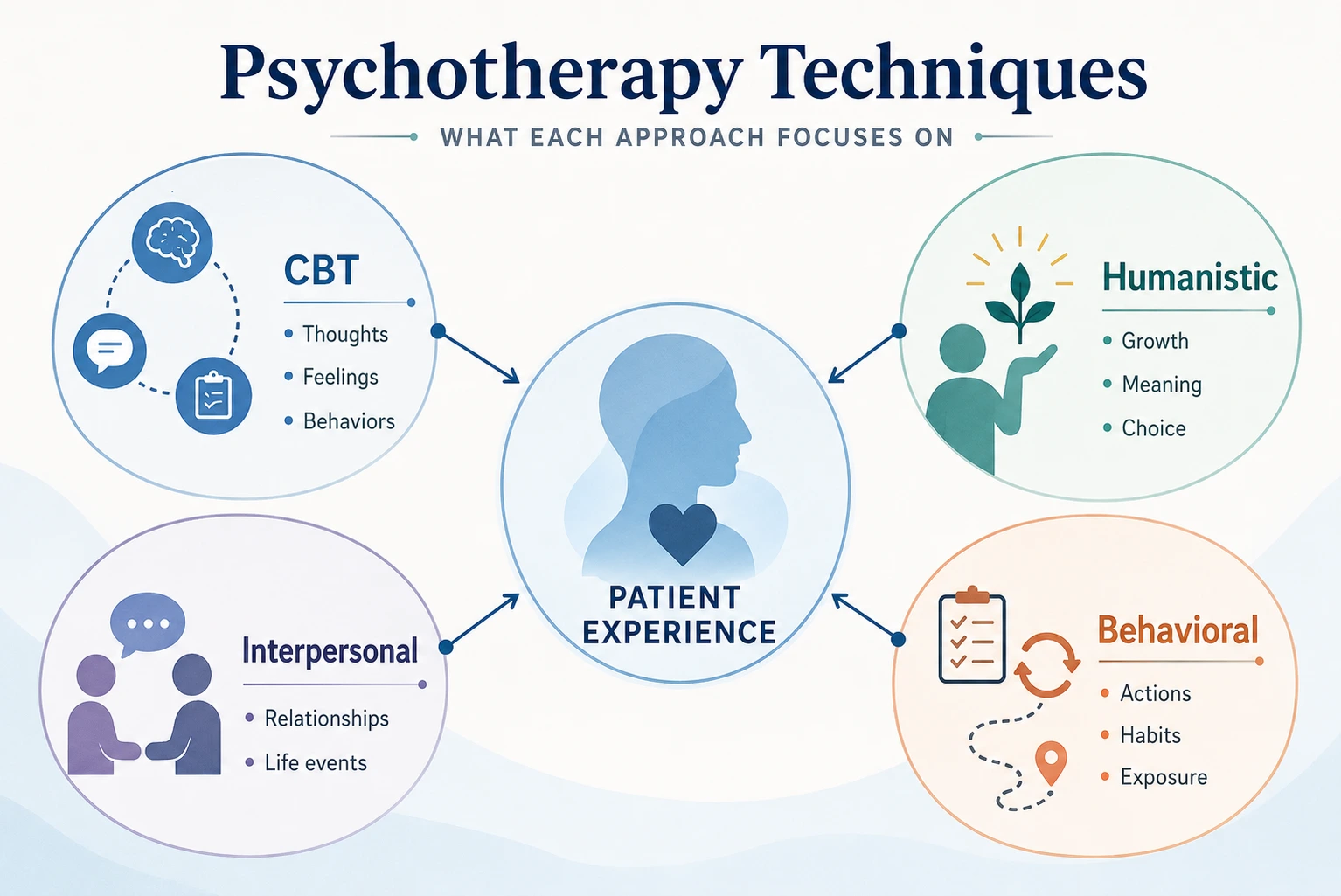
Each approach focuses on a different part of the patient’s experience. Some techniques examine thoughts and behaviors, while others focus on emotions, relationships, personal meaning, or learned responses. Understanding these differences helps you see why one method may fit a particular concern better than another.
If you are preparing for the Psychiatric-Mental Health Nurse Practitioner (PMHNP) certification exam, psychotherapy is one of the clinical areas you need to understand. Your preparation should include the purpose of major approaches, the techniques commonly connected with them, and how those techniques relate to patient needs.
At Advanced NP Certification Review, we help you connect psychotherapy concepts with assessment, communication, and treatment planning. You can explore our PMHNP certification review programs to see how we help you study related clinical topics as part of one connected preparation process.
Understand the Purpose of Psychotherapy
Psychotherapy gives the patient a structured setting to discuss concerns, recognize patterns, and work toward meaningful change. Depending on the treatment goals, it may help:
- Reduce emotional distress
- Improve coping skills
- Strengthen relationships
- Change unhelpful behaviors
- Support healthier responses to difficult experiences
- Work toward agreed-upon treatment goals
Psychotherapy may be used alone or alongside medication and other forms of care. The approach should reflect the patient’s symptoms, diagnosis, preferences, developmental needs, culture, readiness, and treatment setting.
Learning the basics can help you recognize how each approach works. Using psychotherapy in practice, however, requires formal education, supervision, and continued experience.
Recognize the Foundations Shared Across Approaches
Different psychotherapy models use different theories and methods, but several elements commonly support the therapeutic process. These include:
- A respectful professional relationship
- Clear therapeutic boundaries
- Shared treatment goals
- Careful and active listening
- Purposeful questions
- Regular attention to progress
The therapeutic relationship creates the setting in which this work takes place. You need to communicate with empathy, remain attentive, and help the patient discuss difficult concerns without unnecessary judgment or confrontation.
Empathy does not require you to agree with every statement. It means making a genuine effort to understand the patient’s experience while maintaining professional boundaries.
A complete psychiatric assessment provides the clinical context needed to identify treatment goals and consider which therapeutic approach may be appropriate. Assessment findings help you understand what the patient is experiencing, how the concern affects daily functioning, and which needs require the most attention.
Learn the Main Psychotherapy Approaches
Cognitive Behavioral Therapy
Cognitive behavioral therapy (CBT) examines connections among thoughts, emotions, and behaviors. Common techniques may include:
- Identifying unhelpful thought patterns
- Testing interpretations
- Practicing coping skills
- Completing structured activities between sessions
Humanistic Therapy
Humanistic approaches emphasize empathy, authenticity, personal meaning, and the patient’s capacity for growth. The therapeutic environment supports self-exploration while respecting the patient’s perspective and ability to make choices.
Interpersonal Therapy
Interpersonal therapy focuses on current relationships and life circumstances that may affect emotional symptoms. Treatment may address:
- Grief
- Role transitions
- Interpersonal conflict
- Difficulty forming or maintaining relationships
Behavioral Therapy
Behavioral approaches focus on observable actions and learned responses. Techniques may include:
- Exposure
- Reinforcement
- Activity scheduling
- Skills practice
- Gradual behavior change
Connect Techniques With Patient Needs
A psychotherapy technique is useful when it serves a clear clinical purpose. Before considering one, look at the patient’s:
- Main concern
- Treatment goals
- Preferences
- Emotional state
- Cognitive abilities
- Developmental level
- Readiness to participate
You also need to understand why a technique belongs within a particular approach. Cognitive restructuring, reflective listening, exposure, and work around role transitions are not interchangeable. Each method is intended to address different patterns or needs.
Effective PMHNP certification preparation includes knowing the central purpose of each psychotherapy approach, the techniques commonly associated with it, and the concerns it may address.
At Advanced NP Certification Review, we help you connect psychotherapy approaches with assessment findings, treatment goals, and the reasoning used in PMHNP scenarios.
If you want help identifying which psychotherapy and clinical topics need more attention in your study plan, get in touch with us so we can help you decide where to focus your time and effort.
