
Changing a behavior often takes time, especially when motivation, confidence, habits, and everyday circumstances affect what someone feels ready to do. Change models give you a way to understand these influences and recognize why a patient may be thinking about change, preparing for it, actively making changes, or trying to maintain progress.
In psychiatric care, this matters because knowing that a behavior may be harmful does not always lead to immediate action. A patient may have concerns about changing, feel uncertain about the benefits, lack confidence, or face practical barriers. Understanding these influences can help you look beyond whether change has happened and consider what may be affecting the patient’s readiness.
As you prepare to become a Psychiatric-Mental Health Nurse Practitioner (PMHNP), learning how behavior change develops can help you better understand motivation and readiness in patient care. If you want additional support with these concepts, you can consider our PMHNP certification review programs at Advanced NP Certification Review as you explore the material involved in certification preparation.
What Change Models Tell You About Readiness
Change models are frameworks that help explain why people respond differently when considering healthier behaviors. They can draw attention to readiness, perceived benefits and barriers, confidence, and environmental influences.
These models should not be used to label a patient as motivated or unmotivated after one conversation. Instead, they can help you think more carefully about what may be influencing the patient’s decisions.
A clinical interview can help you understand what the patient thinks about a possible change, what concerns may be getting in the way, and what they feel ready to consider.
Understanding the Stages of Change
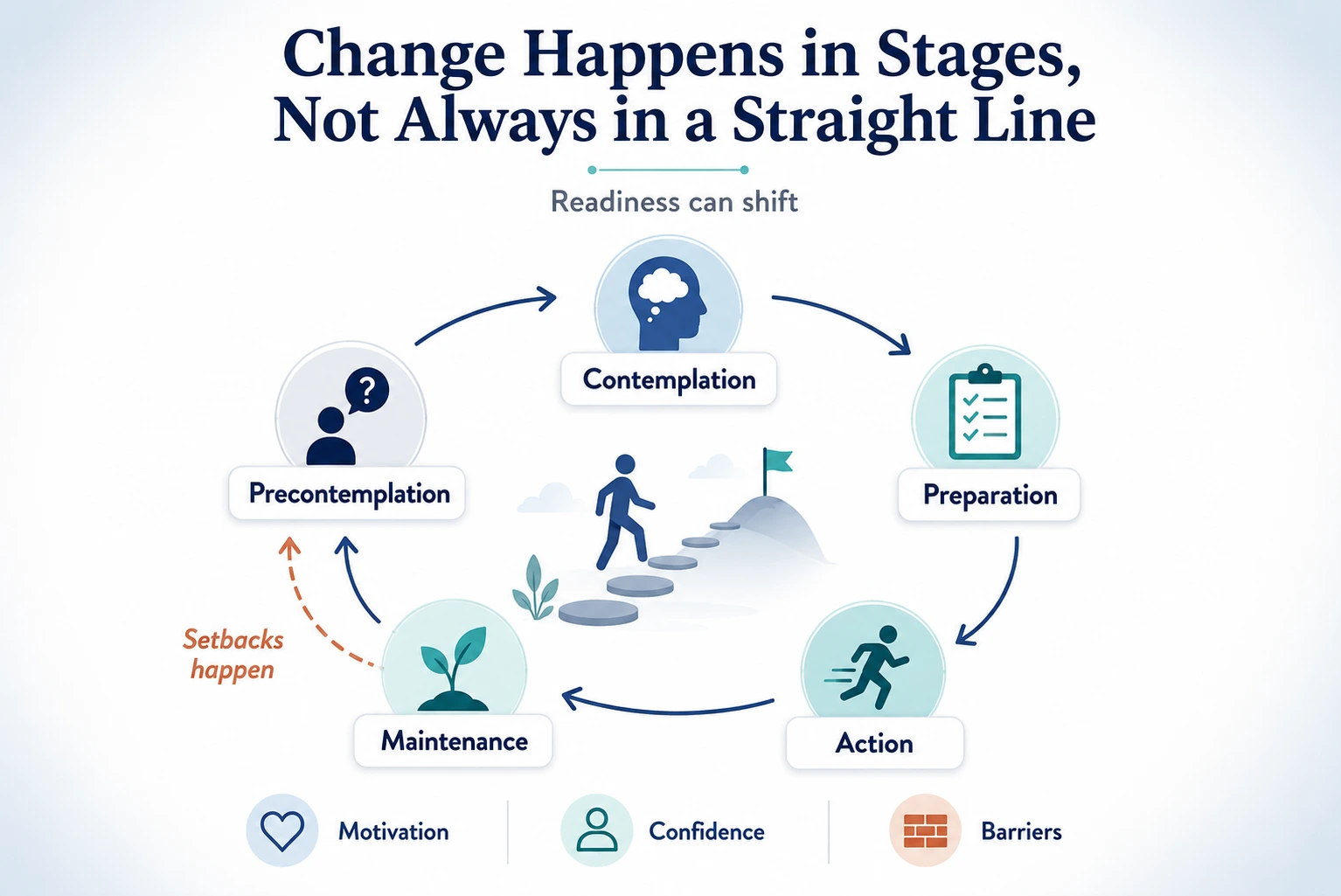
The Transtheoretical Model, often discussed as the Stages of Change model, describes different levels of readiness that may appear as a person works toward changing a behavior. A commonly used clinical framework includes five stages:
- Precontemplation: The patient may not yet see a need for change or may not be ready to consider it.
- Contemplation: The patient is considering change but may still feel uncertain.
- Preparation: The patient intends to make a change and begins thinking about how to do it.
- Action: The patient is actively making changes in behavior.
- Maintenance: The patient works to continue the new behavior over time.
These stages are not a straight path that everyone follows in the same way. A patient may move forward, experience difficulty maintaining a change, and return to an earlier stage before trying again.
Other Factors That Can Shape Behavior
Readiness is only one part of behavior change. Other models highlight why a patient may want to make a change but still find it difficult to act.
Health Belief Model
The Health Belief Model considers how a person views health risks, the expected benefits of taking action, and barriers that may make change harder. For example, a patient may understand why a healthier routine could help but see time, cost, or other demands as significant obstacles.
Social Cognitive Theory
Social Cognitive Theory highlights self-efficacy, or confidence in your ability to carry out a behavior. A patient who has struggled with previous attempts may want to change while doubting whether they can succeed. Social and environmental support can also affect how manageable the change feels.
When reviewing behavior change, it can help to distinguish what each framework emphasizes:
- Stages of Change: Readiness to make and maintain a behavioral change
- Health Belief Model: Perceived risks, benefits, and barriers related to taking action
- Social Cognitive Theory: Self-efficacy, learning, and social or environmental influences
How Change Models Can Shape Patient Conversations
Understanding readiness can help you approach conversations without assuming every patient needs the same response. Someone who has not considered changing a behavior may first need an opportunity to discuss concerns. A patient already preparing for change may be more ready to talk about a practical next step.
You can also listen for:
- Barriers that may make change difficult
- The patient’s confidence in making the change
- Reasons the patient sees for changing
- Reasons the patient may have for maintaining the current behavior
- Available social or environmental support
- Practical steps the patient feels ready to consider
These details provide context that a simple question such as “Are you ready to change?” may miss.
Change models do not predict exactly what a patient will do or guarantee that a particular conversation will lead to change. Their value is in helping you recognize the different influences that may affect behavior.
What to Remember for PMHNP Preparation
For your review, focus on what each framework helps explain. The Stages of Change model emphasizes readiness, the Health Belief Model looks closely at beliefs and barriers, and Social Cognitive Theory highlights factors such as self-efficacy and environment.
As you continue your PMHNP certification preparation, focus on how these different ideas can help you interpret motivation, readiness, and behavior in patient care.
At Advanced NP Certification Review, we help you work through related concepts so you can distinguish what each one is meant to explain.
If you want support making sense of the material in your certification review, you can schedule a free consultation so we can talk through your study needs and questions.
