
Mood disorders are mental health conditions that cause significant changes in emotions, energy, sleep, activity, concentration, and daily functioning. For Psychiatric-Mental Health Nurse Practitioner (PMHNP) students, understanding these conditions requires knowing how depressive, manic, and hypomanic episodes differ and how those episodes relate to specific diagnoses.
Common examples include major depressive disorder, persistent depressive disorder, bipolar I disorder, bipolar II disorder, and cyclothymic disorder. Some symptoms may overlap, but the pattern of episodes, their severity, and their effect on functioning can help separate one condition from another.
If mood disorders are one of the areas you want more help reviewing, we at Advanced NP Certification Review can support your preparation. You can book a free consultation so we can help you organize the concepts and focus on what to review next.
What Are Mood Disorders?
Mood disorders affect more than whether a person feels sad, happy, or irritable. They may change appetite, motivation, speech, judgment, behavior, concentration, relationships, and the ability to manage daily responsibilities.
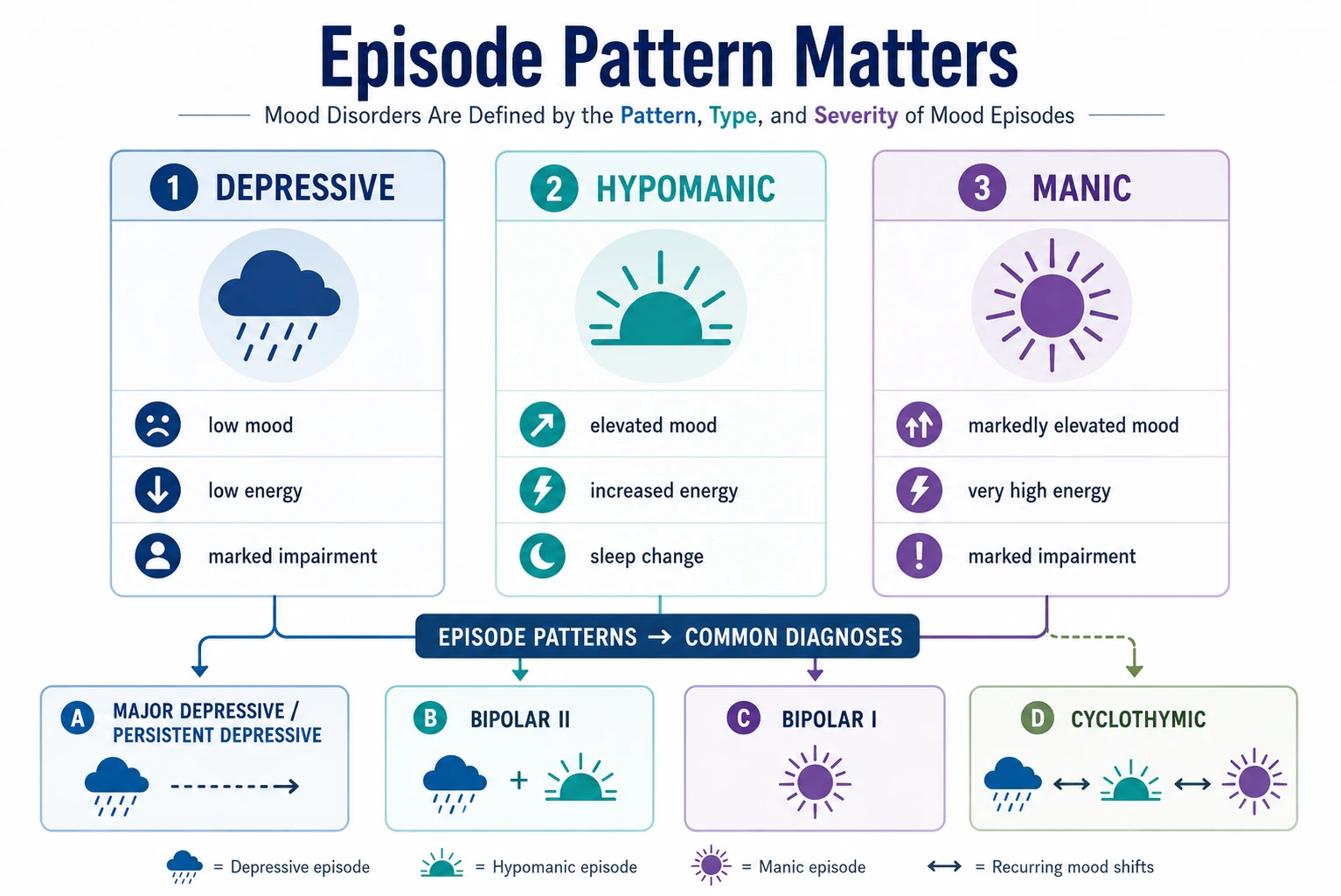
A depressive episode may involve persistent sadness or a loss of interest in usual activities. Other symptoms may include low energy, changes in sleep or appetite, difficulty concentrating, feelings of worthlessness, slowed or restless behavior, and thoughts of death or suicide.
A manic episode involves an elevated, expansive, or irritable state accompanied by increased energy or activity. The patient may sleep much less without feeling tired, speak rapidly, experience racing thoughts, become easily distracted, begin several activities, or make risky decisions. Mania causes marked impairment, may require hospitalization, or may include psychotic symptoms.
A hypomanic episode may involve similar changes in energy, sleep, speech, activity, and behavior, but it is less severe than mania. It represents a noticeable change from the patient’s usual behavior without marked impairment, hospitalization, or psychotic symptoms.
Key Differences Among Depressive and Bipolar Disorders
The type and pattern of mood episodes help distinguish depressive disorders from bipolar disorders.
- Major depressive disorder: Includes one or more major depressive episodes without a history of mania or hypomania.
- Persistent depressive disorder: Involves a long-term pattern of depressed mood accompanied by additional depressive symptoms.
- Bipolar I disorder: Requires at least one manic episode. A major depressive episode may occur, but it is not required for the diagnosis.
- Bipolar II disorder: Includes at least one hypomanic episode and one major depressive episode, without a history of mania.
- Cyclothymic disorder: Involves recurring periods of hypomanic and depressive symptoms that do not meet the full criteria for hypomanic or major depressive episodes.
Bipolar II disorder is not simply a milder form of bipolar I disorder. Hypomania is less severe than mania, but the major depressive episodes associated with bipolar II disorder may still cause serious difficulties in daily life.
How to Put the Differences Together
When reviewing a patient scenario, first identify the episodes in the patient’s history. Mania points toward bipolar I disorder. Hypomania combined with a major depressive episode, without mania, supports bipolar II disorder. Major depressive episodes without mania or hypomania may suggest a depressive disorder.
Pay attention to changes in sleep, energy, activity, speech, judgment, and functioning. Sleeping poorly and feeling exhausted is different from needing little sleep while continuing to feel energized. Irritability alone is not enough to identify a diagnosis because it can occur in several mental health conditions.
You should also consider whether substance use, medications, or a medical condition may be contributing to the symptoms. Safety concerns, including suicidal thoughts, dangerous behavior, psychosis, or an inability to meet basic needs, also require close attention.
This topic is worth reviewing if you are preparing for PMHNP certification because recognizing episode patterns can help you interpret clinical scenarios and distinguish diagnoses.
Conclusion
Mood disorders become easier to compare when you focus on the patient’s episode history rather than memorizing separate symptom lists. Identify whether depression, mania, or hypomania is present, then consider severity, duration, functioning, safety, and possible contributing factors.
Advanced NP Certification Review helps you connect foundational psychiatric concepts with organized study and exam-focused practice.
When you need more structure for mood disorders and other certification topics, explore our PMHNP review programs to see how we can support your preparation.
